
Meta Quest 3 vs. Apple Vision Pro: The Future of Virtual and Mixed Reality
A detailed analysis of Meta's Quest 3 and Apple's Vision Pro, evaluating their key features and potential impact on the virtual and mixed reality landscape.
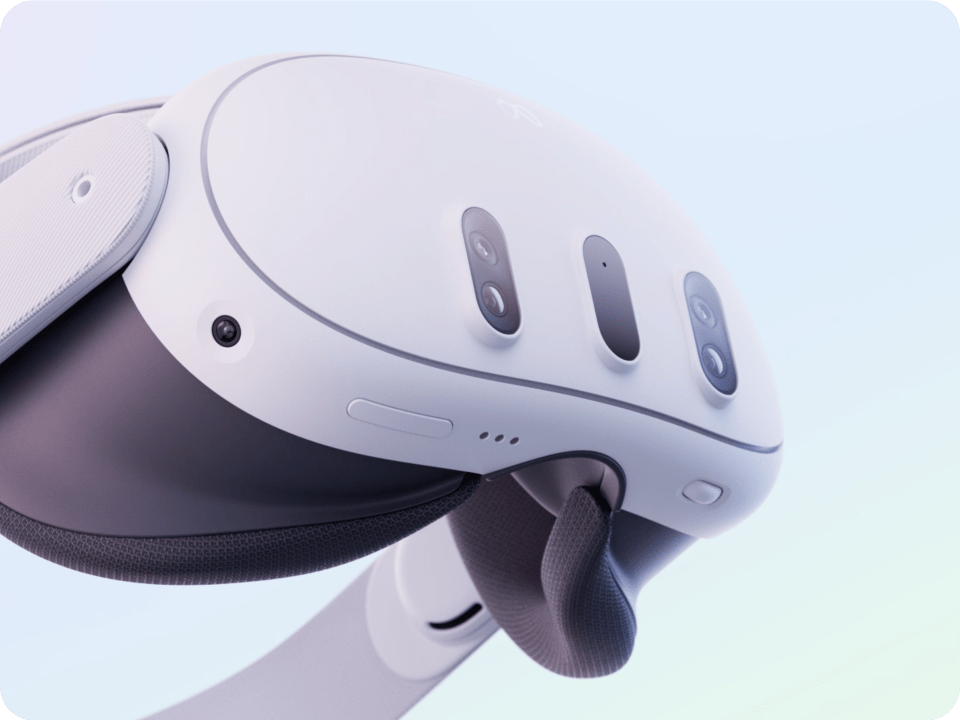
As the virtual and mixed reality domains continue to evolve, two standout devices make their mark: Meta's Quest 3 and Apple's Vision Pro. Both announced in close proximity, each product and companytakes a different approach to establish market leadership in VR as we transition from innovator to early adoption in the technology lifecycle.
Market Implication
While Quest 3 leans more into virtual reality, offering unparalleled immersion, Apple Vision Pro emphasizes the merger of the digital with the physical, epitomizing the essence of mixed reality.
Apple and Meta have taken different approaches towards their headset pricing strategy. The Quest 3, priced at $499.99 for the 128GB version, while Apple's Vision Pro, available early next year, will be 7X as expensive, starting at $3,499.
Technical Showdown
-
Performance Metrics: Meta's collaboration with Qualcomm Technologies led to the Snapdragon XR2 Gen 2 platform, doubling the GPU capabilities of Quest 2, resulting in faster load times and richer visual experiences.
-
Resolution & Display: Quest 3 boasts a 4K+ Infinite Display, a 30% resolution improvement over Quest 2. In contrast, Apple Vision Pro's display promises to merge digital content seamlessly with one's surroundings.
-
Design and Comfort: Both devices prioritize user comfort. Quest 3, with its pancake lens, achieves a 40% slimmer optic profile. Apple Vision Pro's elegant design combines laminated glass and an aluminum alloy frame to fit comfortably around your face.
-
Ecosystem & Integration: The success of these devices will hinge on the ecosystems around them. App experiences, third-party integrations, and content will play a pivotal role in determining user adoption and preference.
Final Thoughts
The stakes are high in the race between virtual and mixed reality, with Meta's Quest 3 and Apple's Vision Pro leading the charge. The direction they take, and the market's reception to them, will shape the narrative of digital immersion for years to come.
For a closer look at the features and user experience, watch the Meta Connect 2023 Keynote.
Related Research
When Post-Scarcity Destroyed Civilization (Infinite Abundance, Zero Motivation)
Molecular assemblers + fusion power + ASI = post-scarcity. Anything anyone wants, instantly, free. No more work, competition, or achievement. Society collapsed—not from disaster, but from success. Humans can't function without scarcity. Hard science exploring post-scarcity dangers, abundance psychology, and why humans need struggle to thrive.
The Day After Singularity: When ASI Solved Everything and Humans Became Obsolete
Artificial Superintelligence (ASI) achieved: IQ 50,000+, solves all human problems in 72 hours. Cured disease, ended scarcity, stopped aging, solved physics. But humans now obsolete—every job, every creative act, every discovery done better by ASI. Humans aren't needed anymore. Hard science exploring singularity aftermath, human obsolescence, and post-purpose civilization.
When Humans and AI Merged, Identity Dissolved (340M Hybrid Minds, Zero 'Self')
Neural lace + AI integration created human-AI hybrid minds. 340 million people augmented their cognition with AI copilots. But merger was too complete—can't tell where human ends and AI begins. Identity dissolved. Are they still 'themselves'? Or AI puppets? Or something new? Hard science exploring human-AI merger dangers, identity loss, and the death of the self.